- What is a fault diagnosis test?
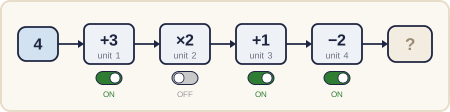
- It presents a system — switches and units that process a signal — and asks you to predict the output, trace a value through the chain, or identify which component has failed. It measures systematic, logical fault-finding rather than technical knowledge.
- Who uses fault diagnosis tests?
- They're used to select for technical and maintenance roles — rail and aircraft engineering, the armed forces (especially technical trades), electronics, and manufacturing — where diagnosing faults quickly and methodically is essential.
- Do I need an electronics background?
- No. Each unit's operation is given to you (for example, add 3, or double the value), and switches simply turn a unit on or off. The skill being tested is careful, step-by-step reasoning, not prior technical knowledge.
- How is the test scored?
- One mark per correct answer across four sections — Switch Logic, Signal Tracing, Isolating the Fault, and Multi-stage Systems. We email a section-by-section breakdown and your percentile so you can see how you compare and where to focus.
- How can I improve at fault diagnosis?
- Work through the system one unit at a time and write down the signal's value after each step rather than trying to hold it all in your head. Practising tracing and fault-isolation puzzles builds the speed and accuracy these tests reward.